

How Superdry used incrementality to find the growth platform attribution couldn't see.

same media.
very different result.
Independent measurement showed every £1 invested generated £7 in incremental return.
QoQ ROAS - Incremental media efficiency increased by a third quarter-on-quarter.
QoQ Revenue - Fospha-measured revenue grew 40% compared with the previous quarter.
QoQ Sales - Independently measured sales increased 35% quarter-on-quarter.
The initial
challenge
Attribution was pointing investment in the wrong direction.
Superdry wanted to compete harder for customers without sacrificing commercial efficiency. The challenge wasn't finding somewhere to spend more. It was knowing where the next pound would create genuine additional growth.
Conventional platform attribution appeared to provide an obvious answer: prioritise retargeting.
In November, it reported:
33.26x ROAS
Retargeting
Vs
1.07x ROAS
Prospecting
On that evidence alone, the logical decision would have been to move budget further down the funnel. But attributed revenue and incremental revenue aren't the same thing...

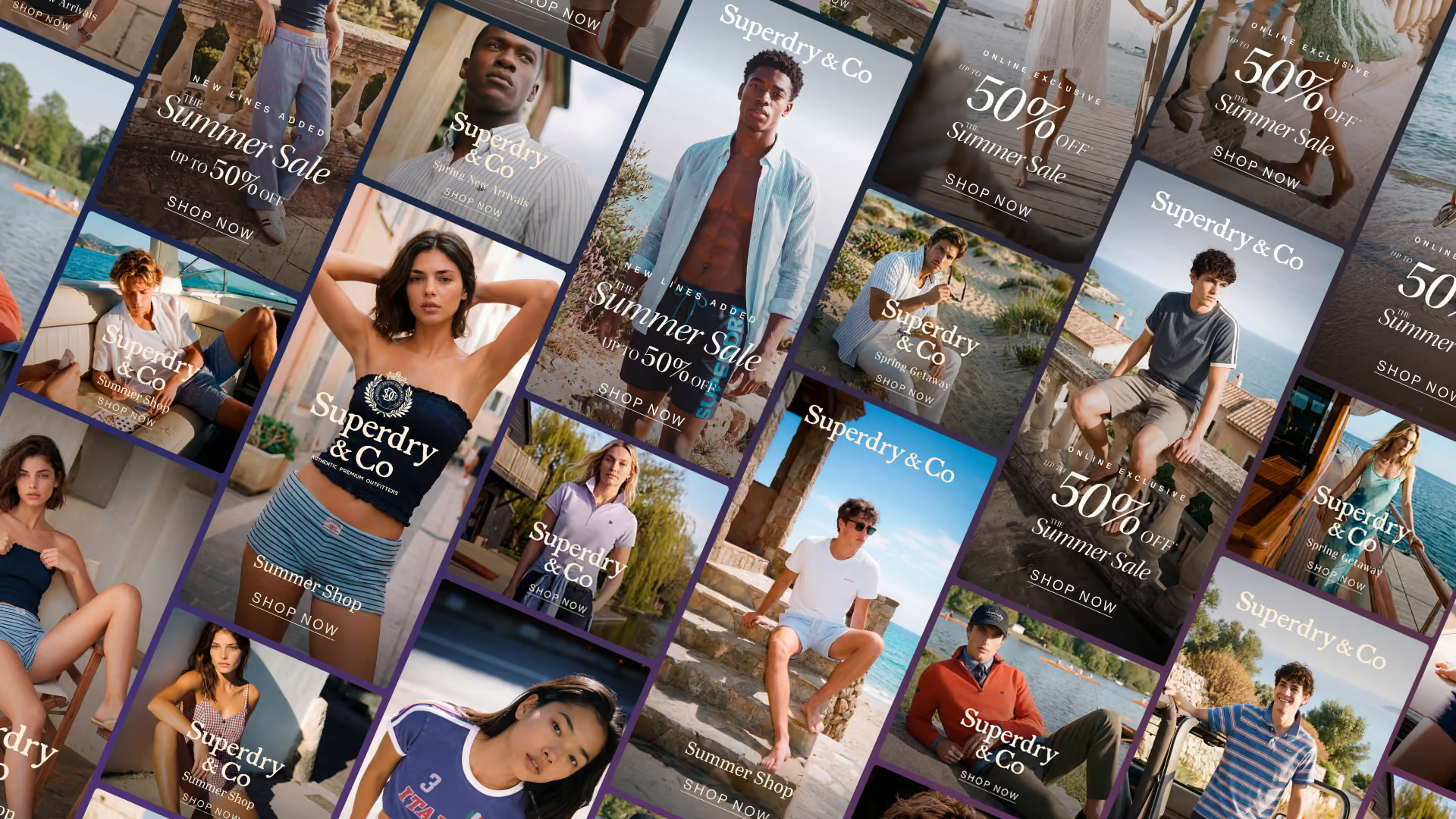
what the datarevealed
Independent measurement from Fospha revealed something dramatically different.
What looked like a huge performance gap within platform reporting was almost non-existent when measured incrementally. In fact, prospecting was producing a marginally greater incremental return.
Platform ROAS
Fospha ROAS
Prospecting
1.07x
6.10x
Retargeting
33.26x
6.05x
Attribution tells you where credit went. Incrementality tells you where additional value came from.
of Q4 media investment was directed towards prospecting.
Fospha revealed a very different story. While platform reporting made prospecting appear dramatically less efficient, independent measurement showed it was creating genuine incremental demand. So we backed the evidence others couldn't see, using incrementality to guide where investment went next.
“Working with ByAtlas allowed us to bring brand and commercial performance much closer together. We could invest in premium environments that strengthened how Superdry showed up as a brand, while independent measurement gave us confidence in the commercial impact we were driving.
Achieving up to 7x ROAS demonstrated that we didn’t have to choose between building the brand and delivering performance — with the right strategy and measurement, we could do both.”

— Ross Burchell, Head of Brand Marketing, Superdry
Better decisions.
better growth.
Independent measurement showed every £1 invested generated £7 in incremental return.
QoQ ROAS - Incremental media efficiency increased by a third quarter-on-quarter.
QoQ Revenue - Fospha-measured revenue grew 40% compared with the previous quarter.
QoQ Sales - Independently measured sales increased 35% quarter-on-quarter.
New-customer CPA - The average media cost required to acquire each new customer.
New-customer ROAS - Every £1 invested generated £3.66 in new-customer revenue.
New converters - Seven in ten measured conversions came from new customers.
where growthcame from
The most important result wasn't the highest ROAS. It was discovering which ROAS mattered.
Had ByAtlas followed platform attribution alone, investment would logically have concentrated on retargeting, the activity apparently generating 20x, 30x and even 33x returns.
Independent measurement showed why that would have been the wrong conclusion.
Prospecting was creating comparable or greater incremental return. Broader domain-led strategies were among the strongest drivers of growth. And more precise targeting wasn't automatically more effective simply because it looked smarter on paper.
ByAtlas built prospecting around premium publisher, domain, contextual, keyword and audience strategies.
Performance improved across every core strategy during Q4, with some of the strongest gains coming from domain-led and contextual activity.
WHITELIST ALL:

BROAD WHITELIST:
DAILY MAIL:
FASHION KEYWORDS:
STYLE & AESTHETIC KEYWORDS
What is your attribution really telling you?
See where your media is genuinely creating incremental growth.
Beyond
expectations


"What stood out most was their transparency. No jargon, no guesswork, just clear thinking and confident execution. Our campaigns became smarter, more efficient, and noticeably more effective, giving us clarity and control we hadn’t experienced before."

— Sophie Cooper, Managing Director, Harley Street Skin

"Working with ByAtlas felt like unlocking a new level of capability. Their process was seamless, their insights sharp, and the performance uplift was clear. A proactive team that consistently found value-add ways to grow impact and sales.”

— Priya Downes, Founder and CEO, Nudea

"ByAtlas helped us pull everything together. Their mix of creativity and practical know-how didn’t just generate ideas, it built momentum. They maximised our budgets, scaled efficiently, and worked like a true extension of our in-house team.”
— Katie Chubb, CMO, Folc.



























"Achieving up to 7x ROAS demonstrated that we didn’t have to choose between building the brand and delivering performance — with the right strategy and measurement, we could do both.”
— Ross Burchell, Head of Brand Marketing, Superdry